What Is NDT? A Deep Dive into 4 Weld Tests in Pipe Fabrication


What Is NDT? A Deep Dive into 4 Weld Tests in Pipe Fabrication
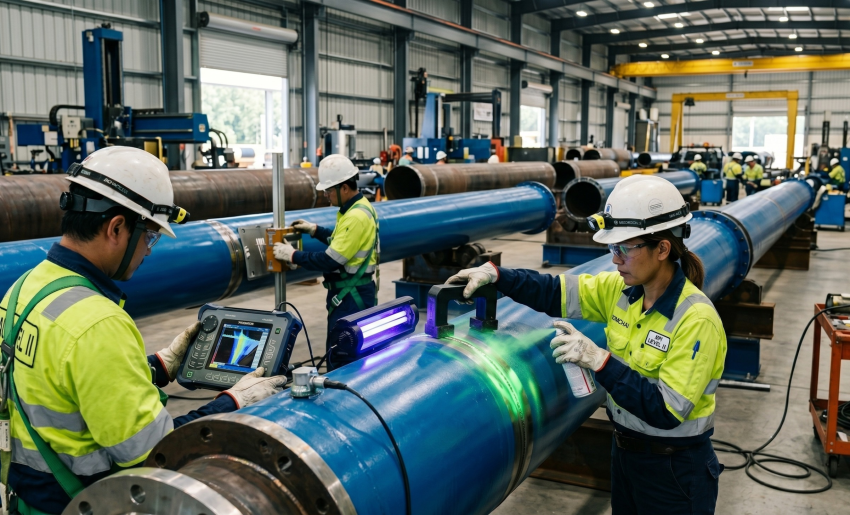
In industrial pipe manufacturing (Pipe Fabrication), what measures safety and service life is the quality of the "weld." If a weld line has cracks, porosity, or defects hidden inside, it can lead to leaks, pipe bursts, or major damage when the plant is running.
This is why Non-destructive testing, or inspection without damaging the workpiece, plays an important role. In this article, Surasak Engineering answers what NDT is, how it differs from general testing, and, when choosing a weld testing method, which type of work suits RT, UT, PT, or MT best, to meet industry standards.
What Is NDT? Why NDT Testing Is the Core of Pipe Manufacturing
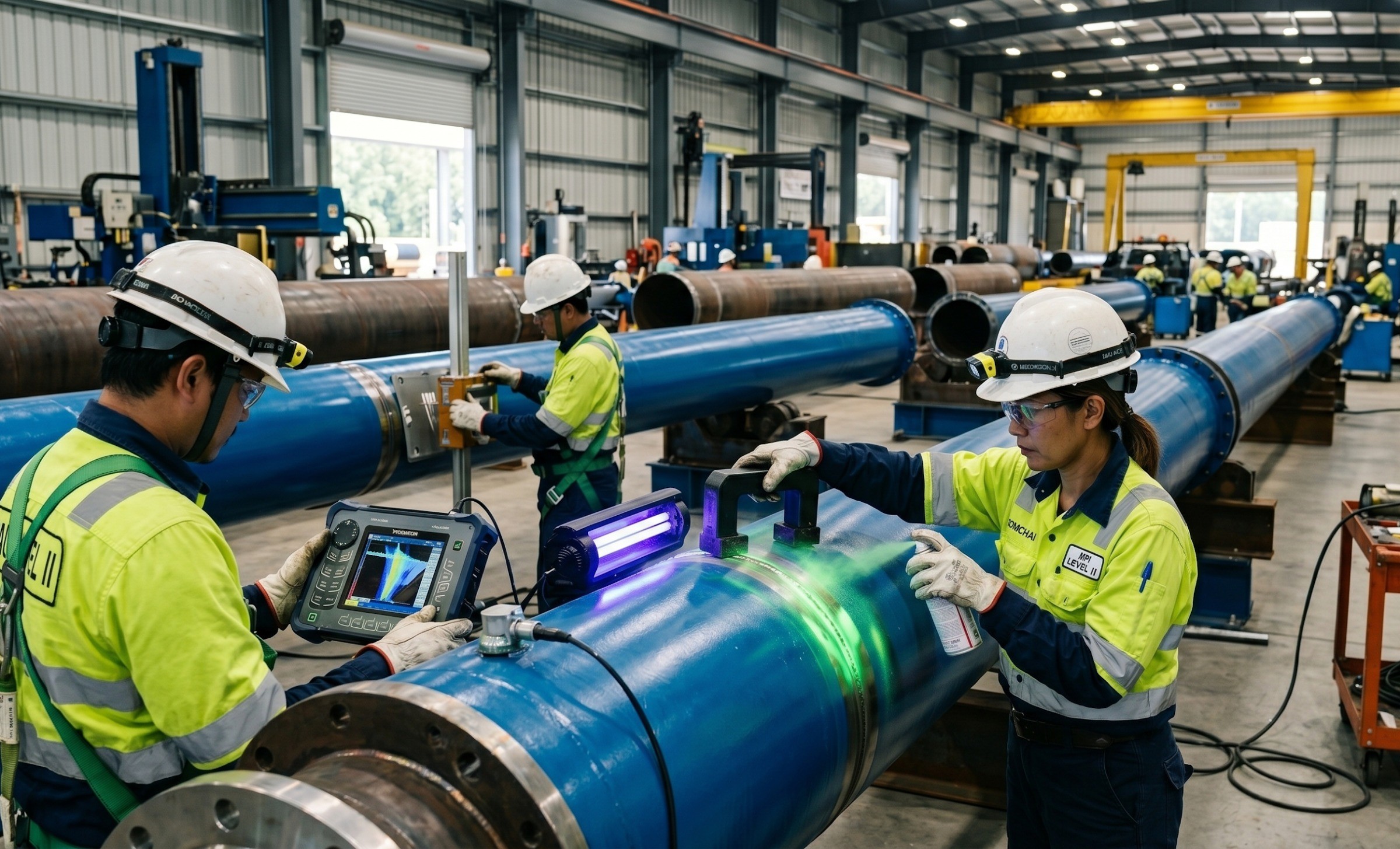
NDT testing is checking the quality of a material or weld line while the workpiece can still be put to use. The main purpose is to find defects such as cracks, porosity, or incomplete weld lines, which can affect the strength and safety of the piping system in the long run.
This type of inspection is therefore used in pipe manufacturing to control quality before parts are installed or put into real use. The reasons many industries place importance on NDT are:
Why NDT Testing Should Be Done Before Real Use
- Detects abnormal welds before installation
- Reduces the risk of leaks or bursts during use
- Helps control the quality of Pipe Fabrication work
- Reduces later repair costs
Comparing 4 Weld Testing Methods in Industrial Work
Non-Destructive Testing has many methods, each suited to a different kind of inspection, both finding surface cracks and defects inside the weld line. The 4 methods below are the ones most commonly used in Pipe Fabrication.
|
Test Method |
Highlights |
Limitations |
|
RT |
Clearly detects defects inside the weld line |
Requires cordoning off an area to control radiation safety, and is costly |
|
UT |
Accurately finds the position and depth of cracks |
Requires experts to analyze results |
|
PT |
Suited to checking surface cracks (Surface Defect) |
Cannot inspect inside the workpiece |
|
MT |
Quickly detects surface and slightly subsurface cracks |
Only usable with materials a magnet attracts |
Radiographic Testing or RT
RT uses X-rays or gamma rays to image the weld, penetrating deeply. Suited to finding internal defects such as porosity or air voids, and commonly used where inspection results must be recorded as images.
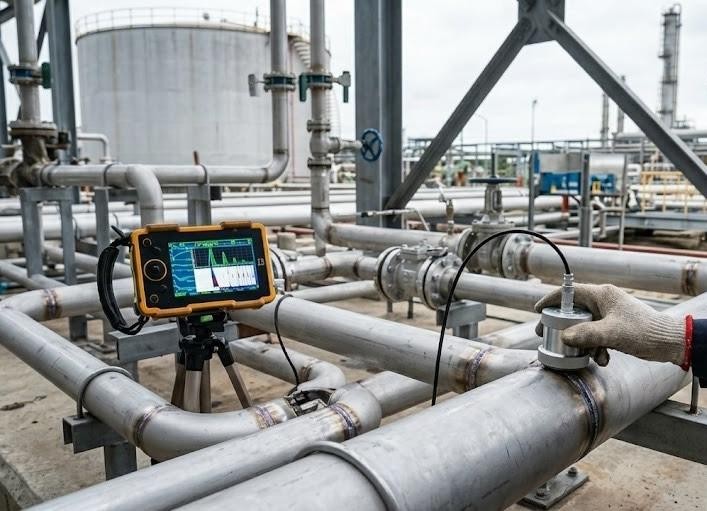
Ultrasonic Testing or UT
UT sends high-frequency sound waves into the workpiece to detect abnormalities inside the weld line. It can identify the position and depth of cracks, showing results as signal values.
Penetrant Testing or PT
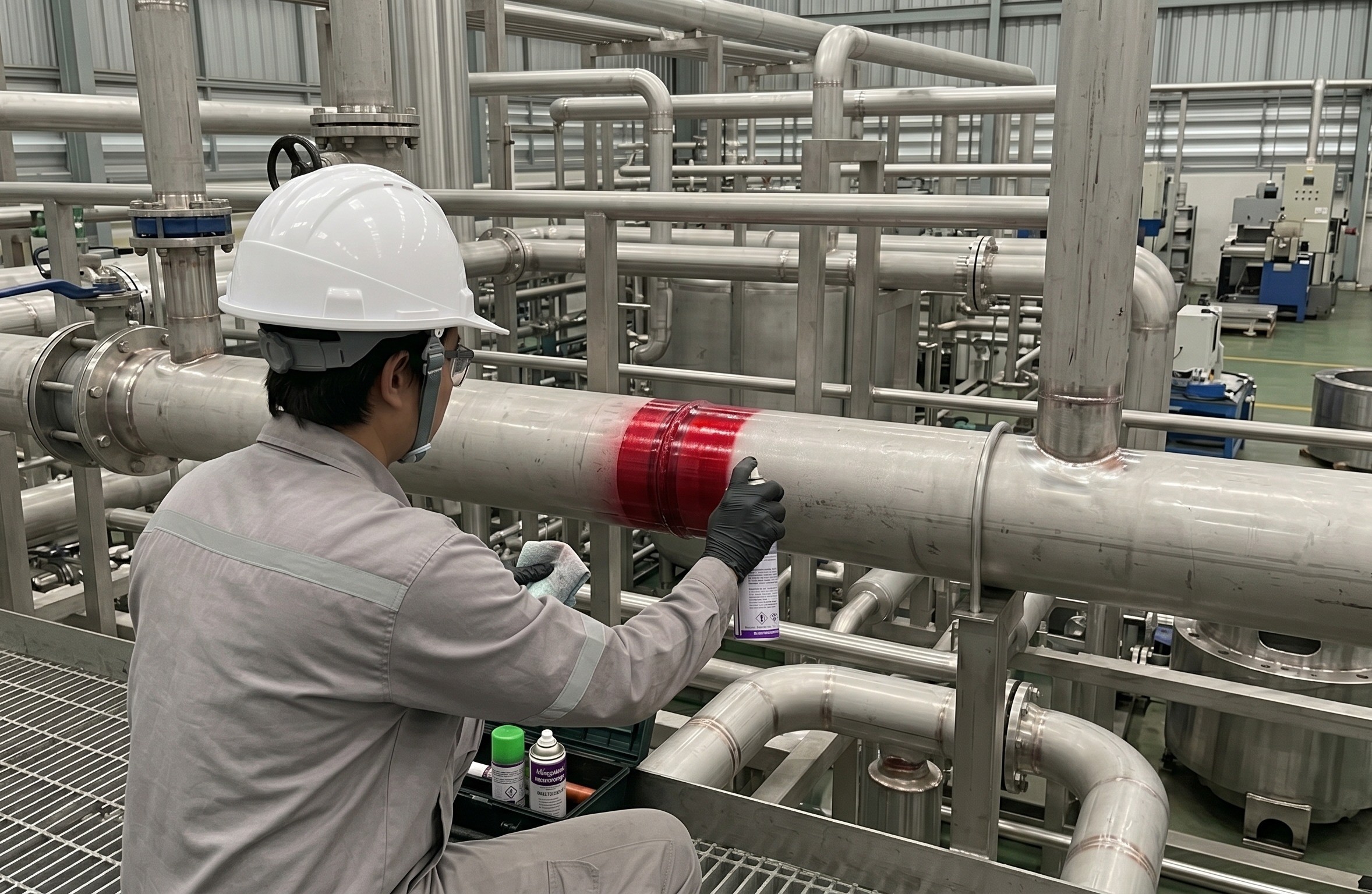
PT uses red penetrant chemical to find cracks on the material surface. Suited to many types of material, including stainless steel, but cannot inspect internal defects.
Magnetic Particle Testing or MT
MT uses magnetic powder to find cracks at the surface and slightly below it. Suited to magnetic materials such as carbon steel; cannot be used with stainless steel.
FAQ: Frequently Asked Questions About NDT Testing
How is NDT different from DT (Destructive Testing)?
NDT is inspection that does not damage the workpiece, so the pipe can still be used. DT is destructive testing, such as pulling, bending, or cutting the workpiece to find strength values, which deforms the workpiece so it cannot be used afterward.
Which NDT method should be chosen for stainless steel pipe?
Generally PT is used to find surface cracks, and RT is used to check deep internal weld defects.
Conclusion
Non-Destructive Testing or NDT is an important step in quality control for Pipe Fabrication work, because it can check welds and various defects without destroying the workpiece, reducing safety risk and helping work meet industry standards better.
Whether RT, UT, PT, or MT, each has highlights and limitations suited to different kinds of work. Choosing the right inspection method should therefore consider the material, nature of use, and standards set by the project, so work is strong, safe, and ready for long-term use.
Surasak Engineering is expert in Pipe Fabrication and industrial system work, placing importance on production standards, weld quality, and inspection processes at every step, so work meets both performance and safety needs in real use.
Consult Surasak Engineering for metal fabrication